Persons [ ] Small acts, when Multiplied, can Transform the World | Howard Zinn, 1922-2010
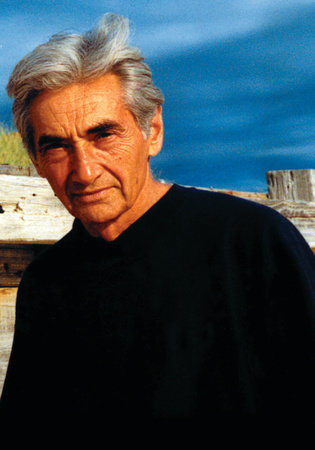
Howard Zinn
“How can you have a war on terrorism when war itself is terrorism?”
“Historically, the most terrible things – war, genocide, and slavery – have resulted not from disobedience, but from obedience.”
“It was an old lesson learned by governments: that war solves problems of control.” *
“The atmosphere of war brutalizes everyone involved, begets a fanaticism in which the original moral factor is buried at the bottom of a heap of atrocities committed by all sides.” ^
“We need to decide that we will not go to war, whatever reason is conjured up by the politicians or the media, because war in our time is always indiscriminate, a war against innocents, a war against children”
“We don’t have to engage in grand, heroic actions to participate in the process of change. Small acts, when multiplied by millions of people, can transform the world.”
“Politics is pointless if it does nothing to enhance the beauty of our lives.” ^
“I didn’t want to spent a lot of close time with someone who believed that fun is a bourgeois indulgence.” ^
“I am convinced that imprisonment is a way of pretending to solve the problem of crime. It does nothing for the victims of crime, but perpetuates the idea of retribution, thus maintaining the endless cycle of violence in our culture. It is a cruel and useless substitute for the elimination of those conditions–poverty, unemployment, homelessness, desperation, racism, greed–which are at the root of most punished crime. The crimes of the rich and powerful go mostly unpunished.
It must surely be a tribute to the resilience of the human spirit that even a small number of those men and women in the hell of the prison system survive it and hold on to their humanity.” ^
“How skillful to tax the middle class to pay for the relief of the poor, building resentment on top of humiliation! How adroit to bus poor black youngsters into poor white neighborhoods, in a violent exchange of impoverished schools, while the schools of the rich remain untouched and the wealth of the nation, doled out carefully where children need free milk, is drained for billion-dollar aircraft carriers. How ingenious to meet the demands of blacks and women for equality by giving them small special benefits, and setting them in competition with everyone else for jobs made scares by an irrational, wasteful system. How wise to turn the fear and anger of the majority toward a class of criminals bred – by economic inequity – faster than they can be put away, deflecting attention from the huge thefts of national resources carried out within the law by men in executive offices.” *
“Protest beyond the law is not a departure from democracy; it is absolutely essential to it.”
“Civil disobedience is not our problem. Our problem is civil obedience. Our problem is that people all over the world have obeyed the dictates of leaders…and millions have been killed because of this obedience…Our problem is that people are obedient allover the world in the face of poverty and starvation and stupidity, and war, and cruelty. Our problem is that people are obedient while the jails are full of petty thieves… (and) the grand thieves are running the country. That’s our problem.”
“The memory of oppressed people is one thing that cannot be taken away, and for such people, with such memories, revolt is always an inch below the surface.” *
“Nations are not communities and never have been. The history of any country, presented as the history of a family, conceals the fierce conflicts of interest (sometimes exploding, often repressed) between conquerors and conquered, masters and slaves, capitalists and workers, dominators and dominated in race and sex. And in such as world of conflict, a world of victims and executioners, it is the job of thinking people, as Albert Camus suggested, not to be on the side of the executioners.” *
“In the long run, the oppressor is also a victim. In the short run (and so far, human history has consisted only of short runs), the victims, themselves desperate and tainted with the culture that oppresses them, turn on other victims.” *
“If those in charge of our society – politicians, corporate executives, and owners of press and television – can dominate our ideas, they will be secure in their power. They will not need soldiers patrolling the streets. We will control ourselves.”
“History is important. If you don’t know history it is as if you were born yesterday. And if you were born yesterday, anybody up there in a position of power can tell you anything, and you have no way of checking up on it.”
“You can’t be neutral on a moving train,” I would tell them. Some were baffled by the metaphor, especially if they took it literally and tried to dissect its meaning. Others immediately saw what I meant: that events are already moving in certain deadly directions, and to be neutral means to accept that.” ^
Howard Zinn, 1922-2010
* A People’s History of the United States: 1492 – Present, 1980
^ You Can’t Be Neutral on a Moving Train: A Personal History of Our Times, 1994
Howard Zinn: You Can’t Be Neutral on a Moving Train – 2004
Documentary directed by Deb Ellis + Denis Mueller